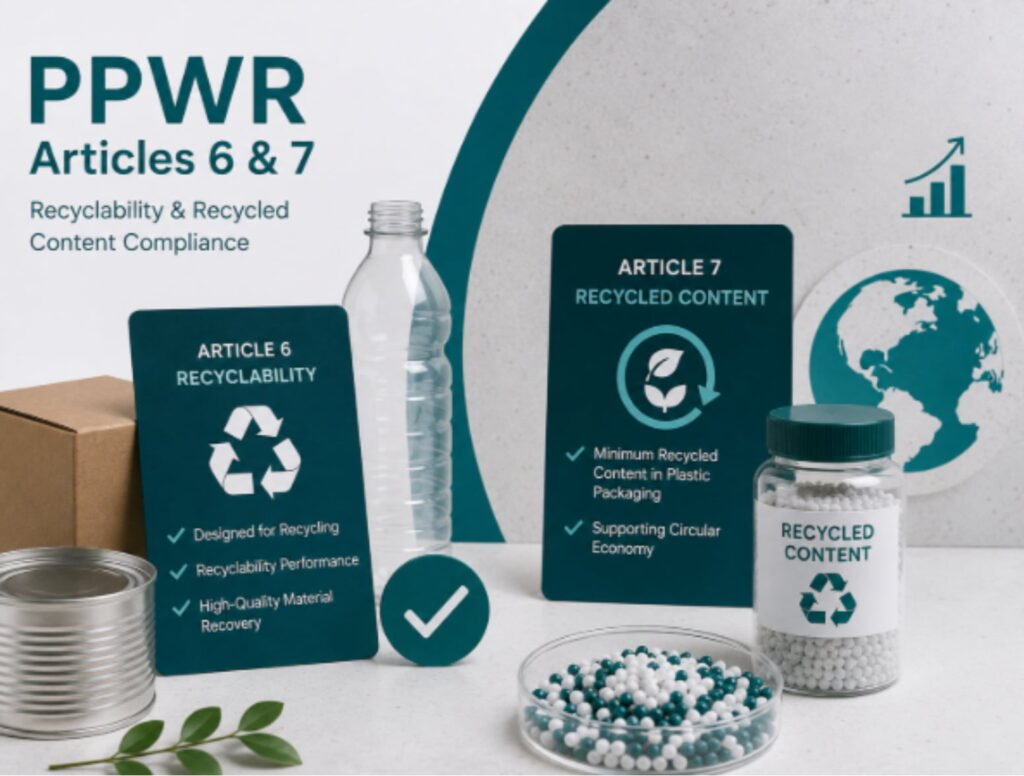

The Packaging and Packaging Waste Regulation (PPWR) introduces new requirements aimed at making packaging more circular and resource-efficient across the European Union. Two of the most significant provisions are Article 6, which focuses on the recyclability of packaging, and Article 7, which establishes minimum recycled content requirements for plastic packaging.
Together, these articles are designed to reduce packaging waste, increase the use of secondary raw materials, and strengthen the circular economy. Businesses placing packaging on the EU market must not only ensure that their packaging can be effectively recycled but also demonstrate that plastic packaging contains the required levels of recycled content. As implementation deadlines approach, companies should begin assessing their packaging portfolios and supply chains to prepare for compliance.
What You Need To Understand?
Articles 6 and 7 work together to improve the environmental performance of packaging throughout its lifecycle. While Article 6 focuses on whether packaging can be effectively collected, sorted, and recycled, Article 7 addresses the use of recycled materials in plastic packaging. Compliance with both requirements will play a key role in determining whether packaging can continue to be placed on the EU market.
Key Requirements
- Minimum Recyclability Requirements
Article 6 requires packaging to be recyclable. To meet this requirement, packaging must be designed for recycling and capable of being recycled at scale through existing collection, sorting, and recycling systems.
The regulation introduces recyclability performance grades that will classify packaging based on its ability to be recycled effectively. Packaging that fails to meet minimum recyclability standards may face restrictions and could become subject to higher Extended Producer Responsibility (EPR) fees.
Businesses should therefore evaluate packaging materials, formats, components, and design features to ensure they support efficient recycling processes.
- Design for Recycling
Packaging design will become a critical compliance factor under PPWR. Elements such as mixed materials, labels, adhesives, inks, and closures can affect recyclability performance.
Manufacturers and importers must ensure that packaging is designed in a way that supports high-quality material recovery and minimises disruption to recycling streams.
- Minimum Recycled Content in Plastic Packaging
Article 7 introduces mandatory recycled content targets for plastic packaging. These targets are intended to increase demand for recycled materials and reduce dependence on virgin plastics.
Companies will need to demonstrate that the required percentage of recycled content has been incorporated into plastic packaging placed on the EU market. This requirement applies to various packaging categories, with specific targets depending on packaging type.
- Verification and Documentation
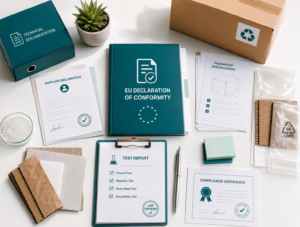
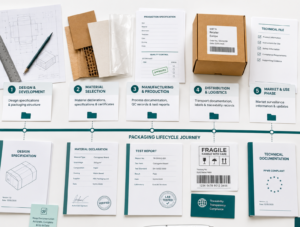
Compliance with Articles 6 and 7 must be supported by technical documentation and verifiable evidence. Businesses must maintain records demonstrating recyclability performance and recycled content levels as part of their overall PPWR conformity process.
Accurate documentation will be essential for conformity assessments, regulatory inspections, and the EU Declaration of Conformity.
Implementation Deadline & Challenges (Deadline: 12 August 2026)
The recyclability and recycled content requirements will become increasingly important as PPWR implementation progresses towards the 2030 compliance milestones. Businesses should begin preparing now, as packaging redesign, supplier engagement, and material sourcing can take significant time.
What Will Be the Main Challenges?
- Assessing Recyclability Performance
Many organisations have limited visibility into how their packaging performs within real-world recycling systems. Determining recyclability grades may require additional analysis and specialist expertise.
- Securing Recycled Materials
Demand for high-quality recycled plastic is expected to increase significantly as businesses work to meet recycled content targets. Securing reliable supply chains may become a major challenge.
- Collecting Supplier Data
Demonstrating compliance requires accurate information from suppliers regarding material composition, recycled content levels, and supporting certifications.
- Managing Technical Documentation
Businesses must maintain structured records and supporting evidence to demonstrate compliance with both recyclability and recycled content requirements.
This is How We Simplify Your Compliance Process:
- Recyclability Assessments
Evaluate packaging against recyclability requirements and identify opportunities to improve packaging design and material selection.
- Supplier Data Collection
Digitally collect declarations, certifications, and supporting documentation required to demonstrate compliance.
- Technical Documentation Management
Maintain compliance records in a structured platform to support conformity assessments and regulatory inspections.
- Compliance Roadmap Development
Identify compliance gaps and establish a clear strategy for meeting future recyclability and recycled content requirements.
Key Takeaway
- Article 6 requires packaging to be designed for recycling and capable of being recycled at scale.
- Packaging will be assessed based on recyclability performance criteria and grades.
- Article 7 introduces mandatory recycled content targets for plastic packaging.
- Businesses must maintain technical documentation and supporting evidence to demonstrate compliance.
- Early preparation will help organisations address packaging design, supplier engagement, and material sourcing challenges before key PPWR deadlines.
Conclusion
Articles 6 and 7 are central to PPWR’s objective of creating a more circular packaging economy. By focusing on both recyclability and recycled content, the regulation encourages businesses to rethink packaging design, material selection, and supply chain management. Compliance will require more than meeting technical requirements. It will demand clear documentation, reliable supplier data, and ongoing monitoring of packaging performance.
As the transition towards circular packaging accelerates, organisations that begin preparing today will be better positioned to meet future regulatory requirements and maintain access to the EU market.
Preparing for PPWR starts with understanding your obligations. PPWR Conformity by PackIntelX helps businesses organise compliance data, identify risks, and prepare for future requirements. Connect with us now!